
How to install fence posts. Straight and solid.
A fence is only as good as its posts. If they're set too shallow, they lean after the first winter. Here you'll learn how deep the hole should be, when concrete is needed and how to save a lot of drilling time on long fences.
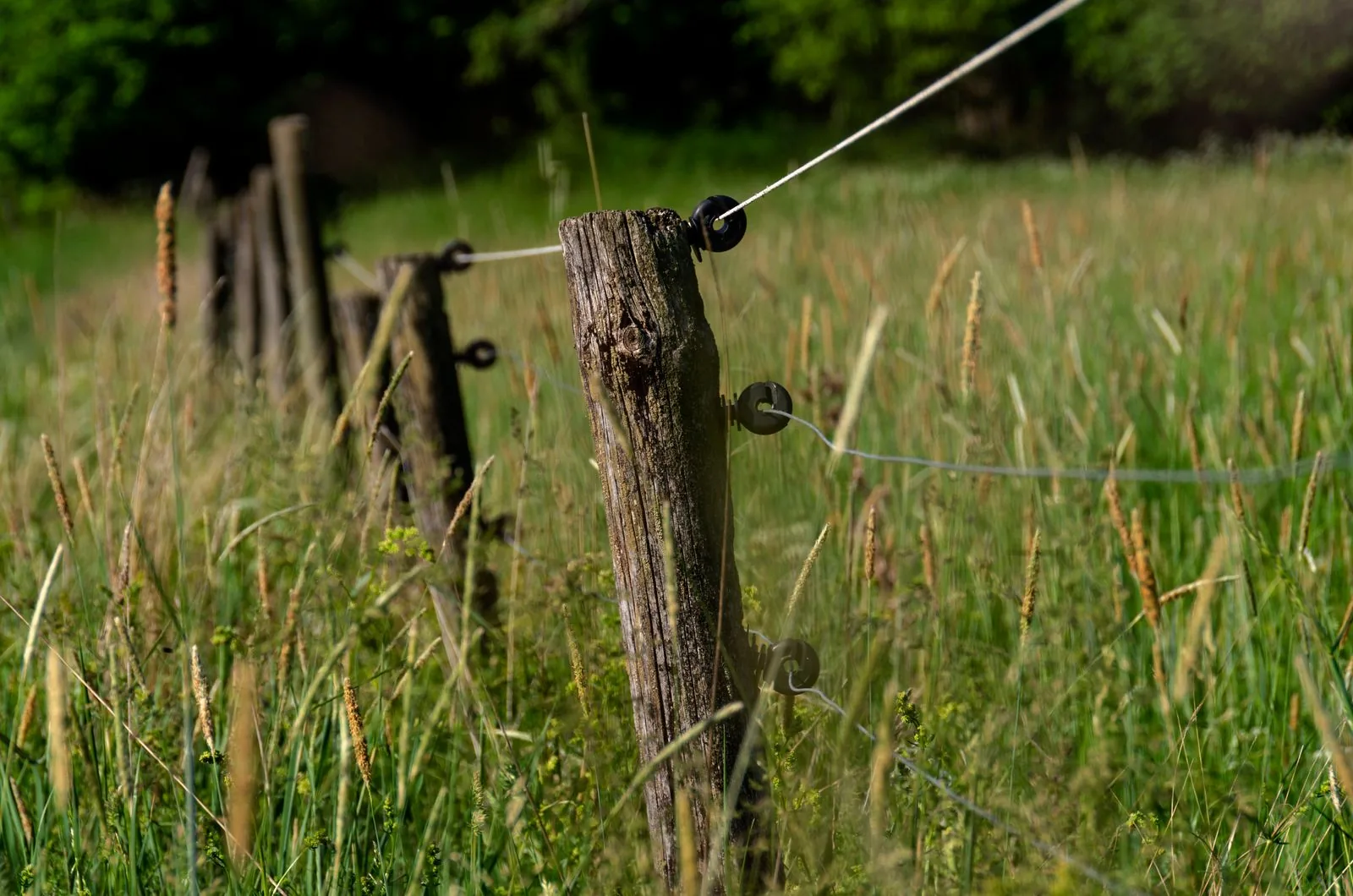 Fencing · Posts
In short
- Garden fenceSetting in concreteThe footing holds for good
- Pasture fenceDriving inDrive pointed stakes instead of using concrete
- Long runsAuger on the loaderEqually deep, vertical holes in series
Ask about a fencing solution ↗
Concrete, drive in or screw in?
| Method | Suitable for | Keep in mind |
|---|---|---|
| Setting in concrete | Garden fences, twin-wire mesh panels, privacy screens, gates | Drill the hole, align the post, let the concrete cure |
| Driving in | Pasture fences, deer fencing, pointed timber stakes | Stony ground slows you down; for many stakes, use a post driver |
| Screwing in | Light fences and short runs | No concrete needed, but limited load capacity |
For fences with wind load, i.e. privacy screens, tall panels and gates, setting in concrete is the standard. For pasture fences, on the other hand, timber stakes are usually driven in.
How deep does a fence post need to go into the ground?
As a rule of thumb, about a third of the visible post height belongs in the ground. At the very least, the footing should reach frost-free depth, which in Germany is usually taken as around 80 cm; check the frost depth for your region. Otherwise freezing water will gradually lift the post.
Holes 20 to 30 cm in diameter are usual for garden fences; gate posts need more. The fence manufacturer's specifications always take precedence, as they take the height and wind load of the system into account.
How much concrete do you need?
You calculate the volume of a round hole with π × radius² × depth. An example: a hole 30 cm in diameter and 80 cm deep holds around 57 litres. A 9 × 9 cm post takes up about 6 litres of that. That leaves around 50 litres of concrete per post, roughly four 25 kg bags of ready-mix concrete. Check the yield on the bag.
On long fences, a large quantity quickly adds up. With the concrete mixer bucket on the mini skid steer, you mix the concrete right at the fence line and pour it into the hole in measured amounts through the chute. Cement mixer and wheelbarrow stay where they are.
Step by step: setting posts in concrete
- Setting out: stretch a string along the fence line and mark the post spacing according to the length of the fence panels.
- Drilling: make the holes to the required depth. Under timber posts, add a layer of gravel for drainage.
- Aligning: insert the post, set it plumb with a spirit level and brace it with battens.
- Concreting: fill in the concrete and compact it. Slope the surface slightly away from the post so water runs off.
- Curing: only fit the fence panels once the concrete can take the load. Rapid-set concrete is often firm within hours; normal concrete needs several days.
Long fences: drilling post holes with a mini skid steer
For a few posts in the garden, a hand auger is enough. For pastures, commercial sites or landscaping projects with many posts, drilling by hand becomes the main job. This is where the mini skid steer comes into its own.
The auger drive turns augers of 150, 200, 300 and 400 mm diameter up to 1,100 mm deep into the ground. The lift arm guides the auger vertically, so nobody has to hold it. That way every hole is equally deep. The same loader carries the stakes to the line with the pallet forks and mixes the concrete with the concrete mixer bucket.
The page Fencing shows what this looks like in practice. For driven stakes on stony ground, we'll discuss with you which solution suits your run.
Tell us the fence length, post type and ground. We'll recommend the right combination of mini skid steer, post hole auger and concrete mixer bucket and, if you wish, show it to you at a demonstration.
Frequently asked questions
How deep do fence posts need to be set in concrete?
As a rule of thumb, about a third of the visible height, but at least down to the frost-free depth of around 80 cm. The specifications of your fence system take precedence.
How much concrete do I need per fence post?
For a hole 30 cm in diameter and 80 cm deep, it's around 50 litres. That's roughly four 25 kg bags of ready-mix concrete, depending on the yield stated on the bag.
When can I fit the fence after concreting?
Follow the information on the bag. Rapid-set concrete can often take the load after a few hours; normal concrete needs several days.
Is an auger on a mini skid steer worthwhile?
If you build fences regularly or set many posts, yes. Every hole is equally deep and vertical, and nobody has to hold the auger.