
Mini digger.Or mini skid steer?
Whether you're laying out a new garden or moving material every day in your business: the machine has to suit your work. This comparison shows you when a mini digger is the right choice and when a mini skid steer, yard loader or compact tractor takes more work off your hands.
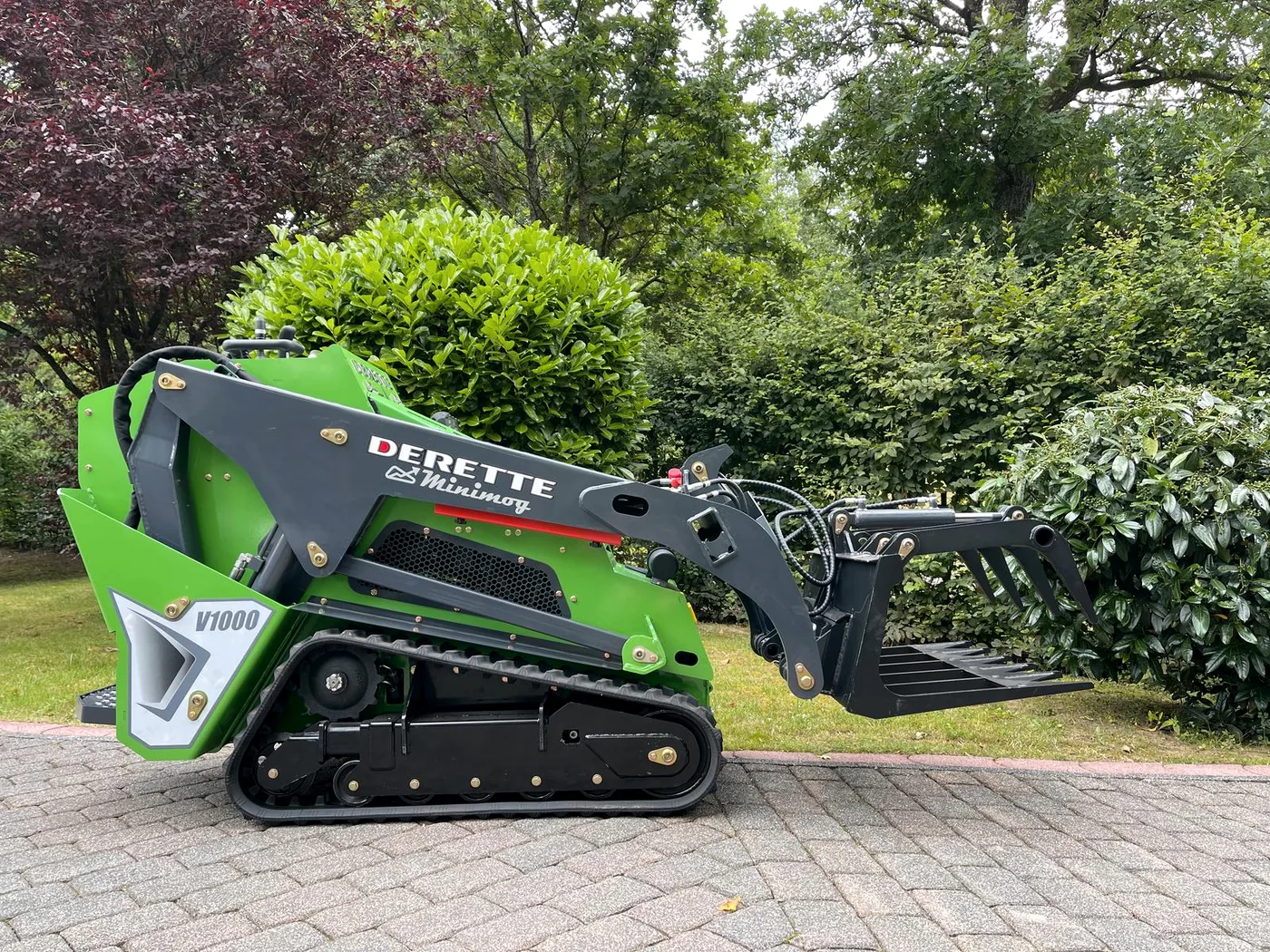 Comparison · Property
In short
- Digging and excavatingMini diggersRemoving soil in a controlled way
- Loading and carryingMini skid steer or yard loaderBring material to where it's needed
- Looking after groundsTractor or mowerFor regular use after the makeover
Which machine for which job?
| Type of machine | Its strength | What matters |
|---|---|---|
| Mini diggers | Precise excavation and trenches | Working depth, swing space and removal |
| Mini skid steers | Moving soil, gravel and building materials | Usable load, access and suitable attachments |
| Yard loader | Regular loading and transport work | Steering and routes around the yard |
| Compact tractor | Recurring grounds maintenance | Maintenance implements and space to turn |
Start with the most frequent job. A suitable tool extends the range of uses; the main task decides the machine.
Mini digger: when soil has to come out
With its bucket, the mini digger excavates soil and places it within its swing range. That makes it suitable for trenches and precise excavation. If the soil is to be stored elsewhere, plan the onward transport with a loader or dumper at the same time.
For work on buildings, foundations or drainage, planning and professional execution belong in the project budget. You'll find the comparison with doing it yourself under Mini digger with operator or DIY.
Mini skid steer: when material has to move on
Topsoil to the back garden, gravel to the path, building materials to the patio: this is where a mini skid steer makes the many recurring transport runs easier. With a bucket you load and spread material. Suitable attachments add further jobs.
For pallets, the approved payload with forks and the intended load centre counts. Ask for this figure. A yard loader is an alternative if loading and carrying happen regularly on your routes.
Plan the construction phase and everyday use separately
During the makeover you need transport capacity. Afterwards, mowing and regular maintenance may take priority. A compact tractor is worthwhile for various maintenance implements; for pure lawn care, a mower is often enough.
Group the building work together and compare hiring with buying. That way you invest in the tasks that actually recur.
Five details for your choice
- Main task and two further jobs.
- Largest material quantity or heaviest load.
- Narrowest access, bends and turning options.
- Ground, gradient and sensitive areas.
- Duration of use and later use.
Measure the route to the job including the attachment. On lawns, weight, undercarriage, turning manoeuvres and soil moisture determine the marks left behind. The checklist for narrow access helps with measuring. Then compare the models in our machine overview.
Describe your main jobs and show us the access to your property. You'll get a recommendation on which machine and equipment to tackle your project with.
Frequently asked questions
Mini digger or mini skid steer for the garden?
For excavation, choose the digger; for loading and spreading material, the mini skid steer. For extensive makeovers, the two complement each other.
Which machine is suitable for private self-builders?
For soil and building materials, a loader is interesting. Choose according to jobs, material quantities and access to your property.
What matters when working on a lawn?
Weight, undercarriage, soil moisture and turning manoeuvres. Plan fixed routes and keep finished areas clear.