
How to remove a tree stump.Without a big hole.
After felling, the stump remains – and with it a dense root system. Whether you dig it out, grind it or let it rot determines the effort, the time and the state of the ground afterwards. Here you can see which approach suits your stump and when a stump grinder on a mini skid steer is worthwhile.
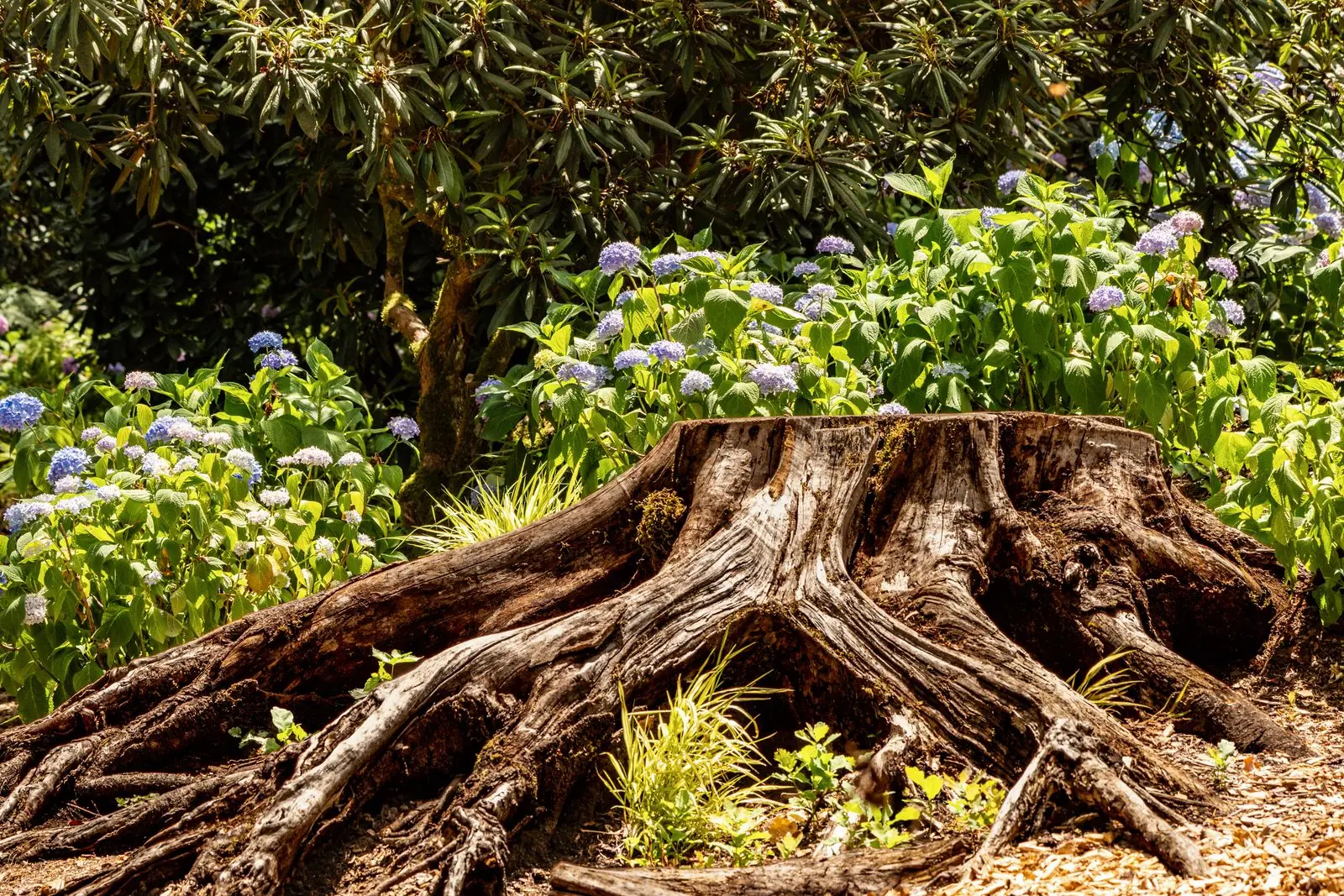 Stumps · Forestry & garden
In short
- Fast and cleanStump grinderGrinds the stump down below the surface
- Root out completelyDigging outBig hole, lots of soil, often with a digger
- Without a machineLetting it rotCosts little but takes years
Enquire about a stump grinder ↗
Three methods compared
There are three ways to remove a tree stump. Which one suits you depends on what is to be created on the area afterwards: lawn, a new bed, a patio or simply clear working space again.
| Method | Effort | Afterwards |
|---|---|---|
| Grinding | Machine with stump grinder, usually done in one go | Wood chips and a shallow hollow; lawn and plants are possible again |
| Digging out | Spade, axe and winch or a digger; lots of manual work with large roots | Large hole that has to be filled with soil and compacted |
| Letting it rot | Drill holes in the stump, keep it moist, cover it | The stump stays visible for several years |
For gardens with lawns, for stumps close to the house and for several stumps in one area, grinding is usually the cleanest method. Digging out is mainly worthwhile if the ground is being excavated anyway, for example for a foundation.
How a stump grinder works
A stump grinder (sometimes called a root grinder) uses a fast-spinning cutting wheel with teeth to remove the wood layer by layer until the stump has disappeared below the surface. The roots in the ground stay where they are and rot over time.
The stump grinder for Minimog mini skid steers removes stumps up to 510 mm high and grinds down to 305 mm below the surface. It can be moved to the left and right, so it also reaches stumps close to walls or fences without repositioning the machine.
Removing tree roots and root stock
Removing the stump doesn't remove the roots. Below the surface remains the root stock, i.e. the stump with its main roots, and strong lateral roots often run far into lawns and beds from it. How much of this has to come out depends on what is to be created on the area.
| Plan | What happens to the roots |
|---|---|
| Lawn, bed, new planting | Grind the stump and roots near the surface. Deeper roots stay in the ground and rot. |
| Paving, patio, path | Grind down below the future formation level, then build up the sub-base as usual. |
| Foundation, pipe, pond | Dig out the root stock, because the ground is being excavated deeply there anyway. |
Strong roots leading away from the stump can be ground off with the same grinder: follow the root along the surface until it is thin enough or dives down. Fine roots in the lawn don't need to come out. If you want to remove the entire root stock, dig it free, cut the lateral roots and lift it out, with a digger or loader for large trees.
Before grinding: what you should check
- Services: check whether power, water, gas or drainage pipes are nearby. Roots like to grow along pipes.
- Foreign objects: stones, nails or old fence wire in the wood damage the cutter teeth. Remove visible items first.
- Shorten the stump: saw the stump off as close to the ground as possible. That saves grinding time.
- Access: measure the narrowest point on the way to the stump. The guide to narrow access shows what matters.
- Chips: decide whether the chips stay as mulch or are taken away. Fill the hollow with topsoil, see Spreading topsoil.
For the felling itself, a local tree protection order and statutory bird-nesting periods may apply. Check with your local authority before felling.
How much does it cost to remove a tree stump?
The price is determined mainly by the diameter and type of wood of the stump, the number of stumps, the access and the disposal of the chips. Hardwood such as oak takes much longer than spruce. Several stumps in one area are cheaper per stump than a single one, because travel and set-up only happen once.
For a single stump in the garden, a contractor or a hire solution is usually enough. Ask about machine and attachment together via our hire offer. If you're a tree care or landscaping business removing stumps regularly, your own grinder on a mini skid steer often works out better.
Buy a grinder or hire a combination?
The stump grinder for Minimog mini skid steers is available from €3,650 including VAT. That is the price of the attachment, not the price for removing a stump. You also need a suitable mini skid steer; we agree the specific combination based on your machine and job. For a single project, request a hire quote for a mini skid steer and stump grinder. We hire out attachments together with the mini skid steer, not on their own.
For tree care and landscaping: one machine for all the follow-up work
After felling, several jobs arise: moving logs, clearing undergrowth, removing stumps. On the Minimog, you only change the tool on the CII quick-attach plate. The skidding tongs grip the timber, the forestry mulcher deals with scrub and young trees, and the stump grinder does the rest.
The page Forestry & Tree Care shows what this looks like in practice. In a demonstration you see the combination on your own ground.
Tell us the number and approximate diameter of the stumps, the access and send a photo. We'll tell you which machine with stump grinder suits you and whether buying or hiring makes more sense.
Frequently asked questions
Is a stump grinder the same as a root grinder?
Yes. Both terms describe a machine that cuts the stump into chips with a rotating cutting wheel.
Do I have to remove the tree roots completely?
Usually not. For lawns and beds, it's enough to grind the stump and the roots near the surface. You only dig out the entire root stock if the ground is excavated deeply there, for example for a foundation.
How deep does a stump grinder go?
That depends on the machine. The stump grinder for Minimog mini skid steers works down to 305 mm below the surface.
Can I simply leave a tree stump in the ground?
Yes, it rots over time. Depending on the type of wood and size, however, that takes several years. Until then it remains an obstacle when mowing and planting.
What do I do with the wood chips?
They make good mulch under shrubs. For a lawn, it's better to fill the hollow with topsoil.