
Mini skid steer attachments.For garden and business.
With the right attachments, you can use your mini skid steer for moving material, working the soil or building fences. What matters is which tool saves you time and effort on the jobs you do most. This overview helps you choose the equipment for your garden project or landscaping business.
 Tools · Landscaping
In short
- Basic equipmentMost frequent job firstThe tool for your biggest bottleneck
- Matching attachmentsMachine and hydraulicsChoose mounting and connections together
- Occasional jobsCompare hiringGroup one-off jobs together
Which attachment for which job?
| Your job | Suitable tool | Key to the choice |
|---|---|---|
| Moving soil or gravel | Bucket | Material weight and usable load |
| Moving pallets | Pallet forks | Load, centre of gravity and approval |
| Drilling post holes | Auger | Ground, hole size and drive |
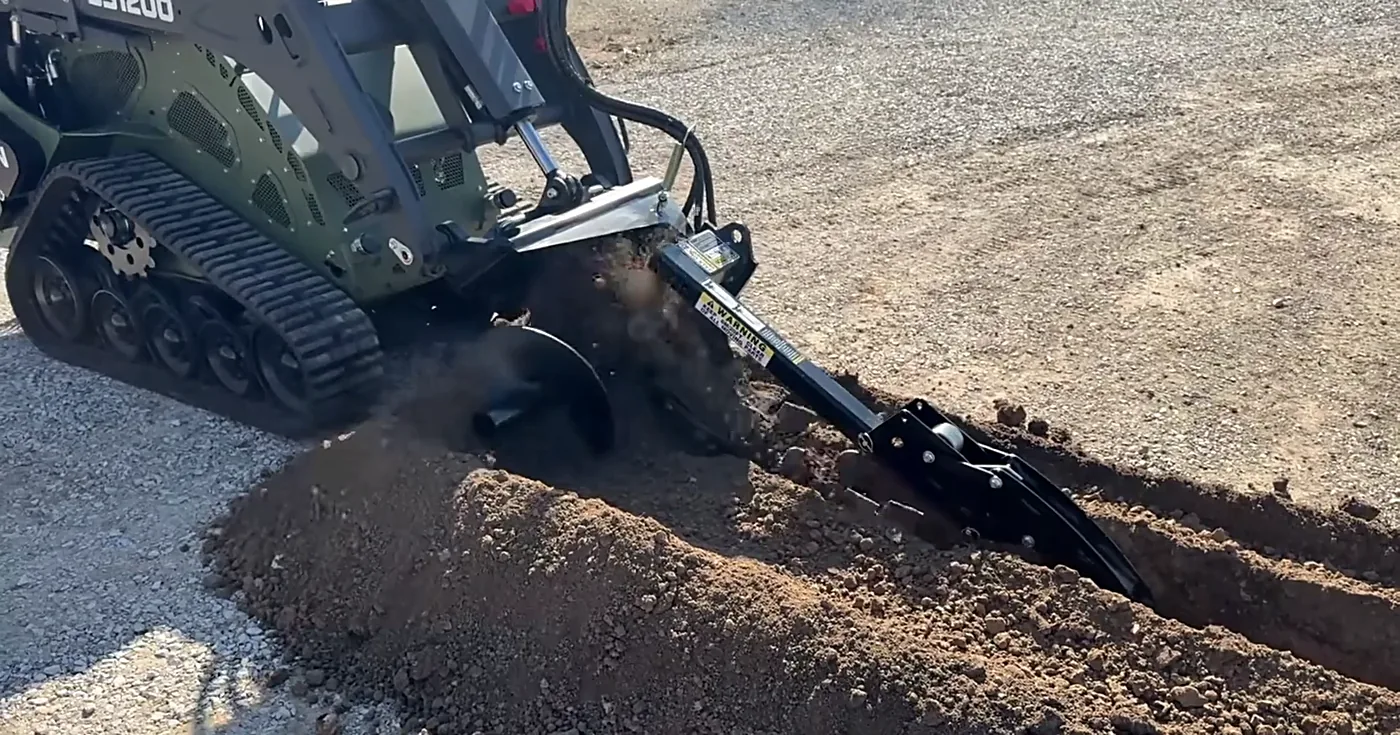
| Digging narrow trenches | Trencher | Depth, width, ground and hydraulics |
| Working the soil surface | Rotary tiller or box blade | Soil condition and desired result |
The attachments overview shows you the tools in detail. Have the attachment you want matched to your machine.
Solve the biggest bottleneck first
In a new-build garden, moving material is often the first priority. A suitable bucket brings soil and gravel to where they're needed. Pallet forks complete the equipment if you move building materials on pallets.
In landscaping, recurring routines count: where does the crew wait for material? Which tool do you hire in regularly? Invest first in the attachment that takes over this work. How often it's used helps you judge whether buying is worthwhile.
Spread, loosen or level?
For transport and rough spreading, choose a bucket. A rotary tiller works the soil; a box blade helps with the surface. Match the tool to the next step – lawn, planting area or further build-up.
Beforehand, you set heights and material quantities and prepare the ground. The guides How to level a garden and Spreading topsoil help with planning.
Tools for posts and trenches
For individual post holes, choose an auger; for narrow continuous trenches, a trencher. Which attachment fits depends on the ground and the dimensions needed. Check the routes of underground services before starting so you begin work in the right place.
In your enquiry, describe the planned depth and width and any known ground conditions. That way, the tool for your fence or trench can be chosen precisely.
The combination has to match
- Mounting and locking.
- Hydraulic flow, pressure and control.
- Couplings, return line and, if necessary, case drain line.
- Attachment weight, load centre and permissible load.
If you already own a loader, send us the model, year of manufacture and auxiliary hydraulics data. Photos of the mounting and couplings complete the information.
For regular jobs, compare the purchase price and running costs. For a one-off project, ask about a suitable hire combination and the period you need. Group the work according to the schedule for your outdoor works.
Describe your job and tell us the model of your mini skid steer. We'll recommend the right attachment and help you put together the equipment and connections you need.
Frequently asked questions
Do all attachments fit every mini skid steer?
The specific combination is what counts. Mounting, hydraulics, connections and attachment weight must suit the machine.
Which attachments do private self-builders need first?
For soil and gravel, start with a suitable bucket. Add other tools based on the work you're actually planning.
Can I enquire about an attachment for my existing loader?
Yes. Tell us the model, hydraulic data and job. Photos of the mounting and couplings help with the choice.