
DIY landscaping.And get stuck in yourself.
Once the house is built, the garden, paths and patio need finishing too. If you tackle the outdoor works yourself, a clear sequence helps you use your budget sensibly and avoid doing work twice. Here you can see which steps build on each other and where a machine makes your own work easier.
 Planning · Self-builders
In short
- Plan firstHeights and accessThen decide on quantities and machines
- Do it yourselfMoving materialPlan specialist work in advance
- Finish lastLawn and planting areasComplete heavy transport first
Machine for my building project ↗
Which jobs will you take on yourself?
Moving material, spreading soil and working prepared areas are jobs you can easily do yourself. Decide beforehand which work you want to take on with the time and help available. After a briefing, a suitable machine makes the heavy transport work easier.
For drainage, retaining structures and work on the building itself, plan in a specialist contractor. That way you invest in the crucial trades and do the rest of the work yourself.
The right order on a new build
| Step | How to make progress |
|---|---|
| 1. Define the areas | Draw in garden, paths, patio and access |
| 2. Plan heights and water | Coordinate connections and drainage |
| 3. Do the rough earthworks | Organise excavation, removal and storage areas |
| 4. Install material | Group deliveries and transport |
| 5. Finish the garden | Prepare planting areas and lawn last |
Keep a site access clear until the heavy transport is complete. That way you won't drive over the fresh lawn later.
Organise deliveries without detours
Before ordering, agree on an unloading spot from which you can easily move the material on. Soil, gravel and patio materials should be kept separate and remain accessible. If the first heap sits right in front of the gate, it will block the next delivery or the machine.
Order according to the construction phase: first the material for the rough work, then for the finished surfaces. Also plan space for soil you'll reuse later.
Choose the machine according to the job
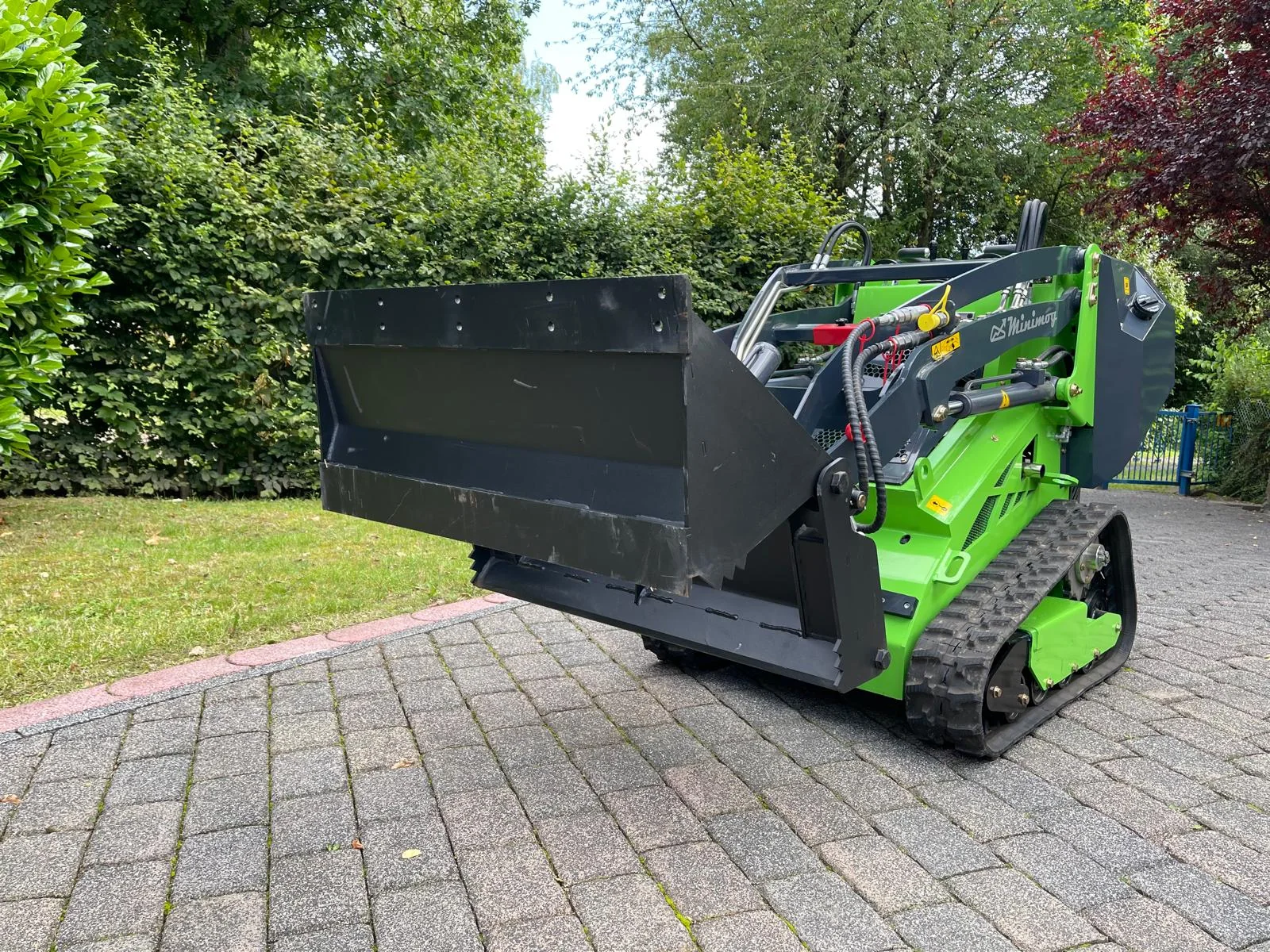
Use a digger for the excavation, while a mini skid steer brings soil and building materials from the storage area to where they're installed. Whether the machine pays off is shown by the number of trips: for small quantities over short distances, a wheelbarrow is enough; for many trips, a loader takes a lot more work off your hands.
Quantity, distance and access are decisive. The machine selection for your property shows the differences. Measure the entire access route including bends before choosing a model.
Prepare budget and enquiry
To keep your budget under control, list planning, material, delivery, machine, specialist contractor and disposal as separate items and add a buffer for extra quantities. For hire, group the prepared work into one period; when buying, factor later use and maintenance into the calculation.
- Which areas are being created and which job comes first?
- Where are the material store and access routes?
- What quantities are you moving?
- How wide is the narrowest access?
- When do you work yourself, and when does the specialist come?
For the next construction phase, the guides How to level a garden and Spreading topsoil will help.
To keep your own work moving, we choose the machine according to the upcoming jobs and your property. Tell us the tasks and material quantities and add photos of the access.
Frequently asked questions
What can I do myself on the outdoor works?
Moving material, spreading soil and working prepared areas can easily be done yourself. Plan specialist work and machine briefing in advance.
When do I lay the lawn?
After the heavy earthworks and material transport. Then prepare the soil for seed or turf.
Should I hire or buy for a new-build garden?
Hiring suits grouped construction phases. Buying becomes interesting if you'll use the machine regularly later.