
Spreading topsoil.Plan the quantities properly.
When the heap of soil is in front of the house and the new lawn is to be created behind it, moving it quickly becomes the biggest task. With the right quantity calculation and a well-prepared route, you spread the topsoil exactly where it's needed and avoid unnecessary rehandling.
 Material · Self-builders
In short
- Calculate the quantityArea × layer thicknessCalculate in metres, get cubic metres
- Prepare the subsoilDeal with compactionBefore applying the new soil
- Group transport runsPlan a suitable routeKeep finished areas clear
Find a machine for moving soil ↗
How much topsoil do I need?
Area in m² × layer thickness in metres = quantity in m³. Set the layer you need according to the existing soil and its later use. These examples show the calculation:
| Area | Example layer thickness | Volume |
|---|---|---|
| 50 m² | 10 cm = 0.10 m | 5 m³ |
| 100 m² | 15 cm = 0.15 m | 15 m³ |
| 150 m² | 20 cm = 0.20 m | 30 m³ |
Agree settlement and delivery quantity with the soil supplier. If the quote is in tonnes, use their conversion factor for the specific material. That way you order the right amount instead of guessing.
Prepare the ground before delivery
Topsoil is the humus-rich upper layer in which lawns and plants grow. If site traffic has compacted the subsoil, prepare it before applying and loosen the areas that need it. That way the new area is built on a suitable base.
Keep topsoil separate from rubble and gravel and choose the soil quality to suit lawn, bed or planting area. If you set the target heights at the patio, paths and edges before delivery, the soil can then be spread without moving it again.
Wheelbarrow or mini skid steer?
For a little soil over a short distance, a wheelbarrow is enough. With several cubic metres, the number of trips grows quickly: 12 m³ already means 200 loads at an assumed 60 litres per load.
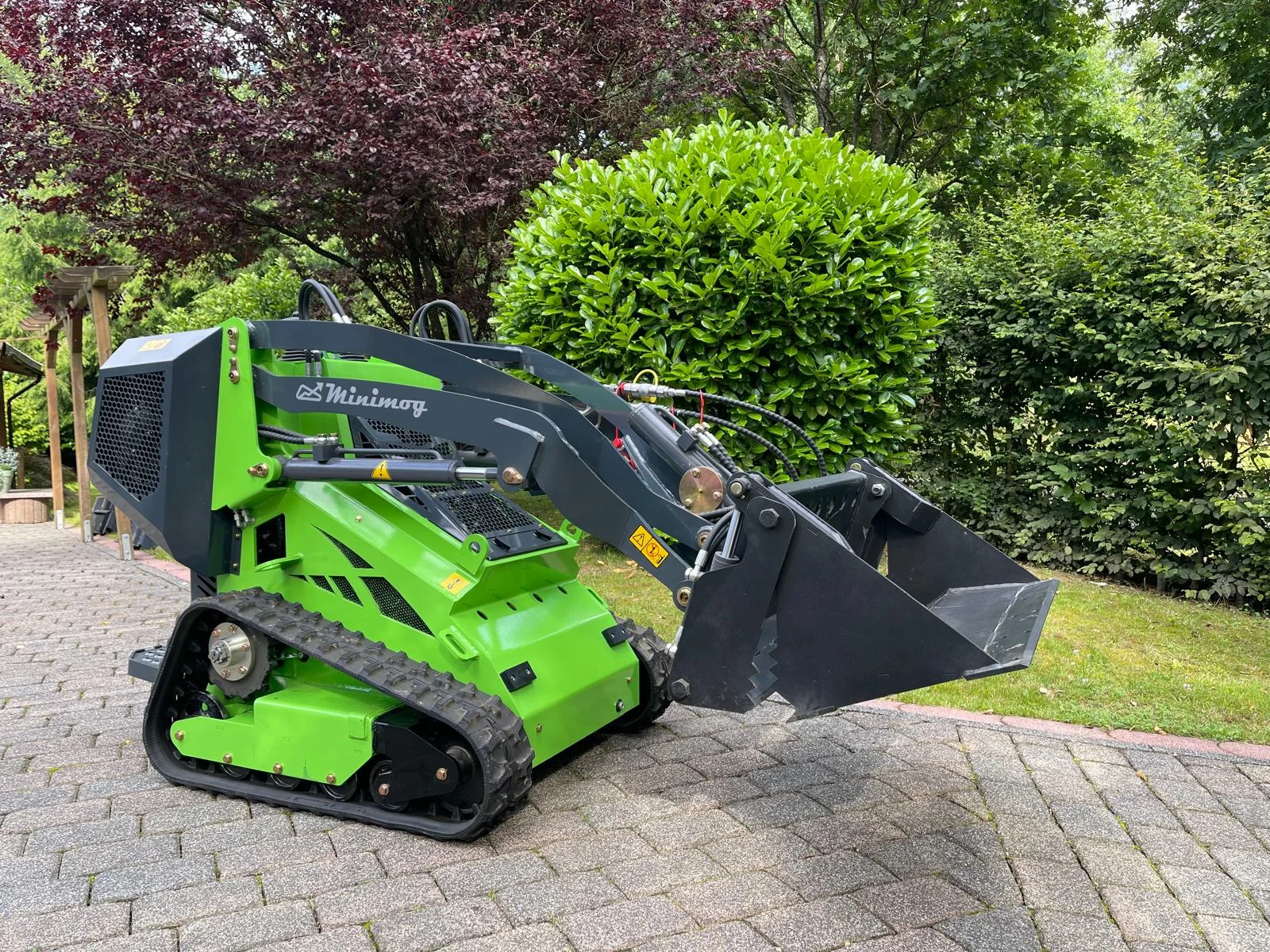
A mini skid steer takes over loading, carrying and rough spreading. Choose the bucket according to material weight and approved load. Route length, access, gradient and ground also count for the choice. A heap that is easy to reach saves detours on every trip.
Spreading topsoil in five steps
- Measure the area and mark target heights.
- Prepare the subsoil and decide on a storage spot.
- Have the soil unloaded without blocking the access.
- Spread section by section from the back towards the exit.
- Check the heights and finish the surface for seeding or planting.
Avoid unnecessary trips over the topsoil you've laid. Work the area when the soil moisture is right. For additional levelling, the guide How to level a garden helps.
Keep an eye on the total price
On top of the soil price come delivery, preparing the area and moving it around the property. Check where the delivery lorry can actually unload. A low soil price loses its advantage if the material has to be moved several times.
Organise delivery and subsoil before hiring the machine. Then group soil transport and other material work together. In the plan for your outdoor works you'll find the right order.
If you're moving several cubic metres of soil, a loader can replace many wheelbarrow trips. Based on your amount of soil, distance and access width, we'll recommend a machine for moving material on your property.
Frequently asked questions
How much topsoil do I need for 100 m²?
With a 15 cm layer, the calculation gives 15 m³. Agree layer thickness and order quantity with the existing soil and the supplier.
Do I order topsoil in tonnes or cubic metres?
Your area calculation gives cubic metres. For tonnes, use the supplier's conversion factor for the soil offered.
What do I do with compacted subsoil?
Prepare the subsoil and loosen the areas that need it before applying topsoil.