
How to level a garden.With a clear plan.
If bumps make mowing difficult or puddles remain after every rain, it's worth taking a close look at heights and subsoil. Here you'll learn how to level your garden, calculate the soil you need and organise the work so that patio, paths and lawn fit together later.
 Soil · Garden
In short
- Before levellingSet target heightsInclude connections and water run-off
- Plan the materialCalculate sub-areasRemove, spread or add soil
- Divide up the workRough before fineMove first, then create the surface
Find a machine for levelling ↗
First clarify heights and subsoil
An even garden area needs matching connections to the patio, paths and property edges. Mark the target heights and take the planned fall for water run-off into account. For larger changes in height and drainage, involve a specialist contractor.
Pay particular attention to spots with puddles: compacted soil can hold water. Prepare this subsoil before spreading additional soil.
Levelling a garden in five steps
- Survey the area and check where services run.
- Mark target heights and connections.
- Record high points, hollows and material quantities.
- Remove or add soil and spread it roughly.
- Check heights section by section and create the fine finish.
Start at the back and work your way towards the exit. With a clear transport route, you avoid the machine having to drive back over the finished area at the end.
Which machine helps with levelling?
| Job | Suitable solution |
|---|---|
| Evening out small bumps | Hand tools and suitable material |
| Removing soil in a controlled way | Digger or suitable loading equipment |
| Transporting and roughly spreading soil | Mini skid steer with a suitable bucket |
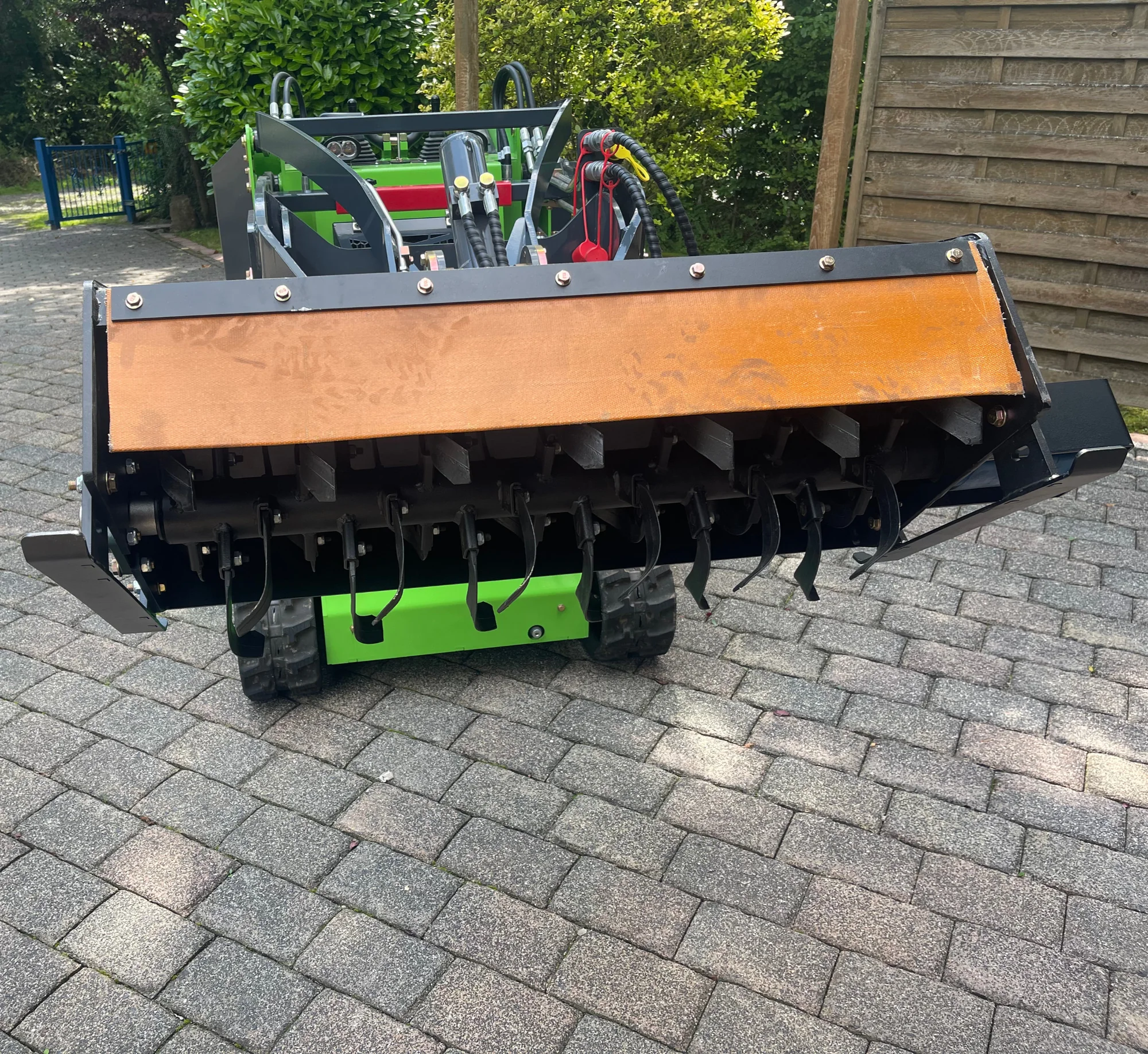
| Working the surface | Box blade or rotary tiller to suit the soil |
With the bucket, you first transport and roughly spread the soil. Then you work the surface for seeding or planting. If the tool suits your soil and the result you want, you save yourself extra passes.
How much soil do you need?
Area × layer thickness = volume. Example: 80 m² × 0.05 m gives 4 m³ for an even additional layer. If the heights vary, calculate each sub-area separately.
Agree the order quantity including settlement with the supplier. If you're removing soil, plan storage space or removal. More quantity examples can be found under Spreading topsoil.
Cut costs through preparation
The costs are made up of material, delivery, removal, machine, transport and labour. When requesting quotes, describe the same area and the same target heights. That way you compare the full scope of work.
Before the hire starts, material, heights and removal should be organised. Then you use the machine for the actual work. Also consider the route from the unloading point into the garden – long transport distances often determine the effort more than the area itself.
Avoid three typical mistakes: filling on top of compacted soil, working without reference heights and driving over finished areas again. For the entire makeover, the schedule for outdoor works helps.
Cost example for excavation
If excavation is needed to level the heights, the Rippa R15 Eco from Derette costs from €116 per day including VAT. Delivery within 10 km costs €80. For one hire day plus this delivery, that comes to €196. This is only this share of the costs: fuel, agreed return, material, disposal and other services may be added. For transport and levelling with a mini skid steer, you'll receive a quote for the right combination. See hire prices and terms.
For your earthworks we recommend a combination of machine and tool. Tell us the area and amount of soil and show us in photos what the access to the garden looks like.
Frequently asked questions
Can I level the garden with a mini skid steer?
Yes, with a suitable bucket you transport and spread soil. Then you check the target heights and finish the surface with the right tool.
Why do puddles stay in the garden?
Often compaction, soil type and water run-off all play a part. Check the subsoil before filling the area.
How do I calculate soil for filling?
Multiply the area in square metres by the layer thickness in metres. If the heights differ, calculate the sub-areas separately.